

Two AI cameras placed outside fire stations in Birmingham and Wolverhampton recorded 17,225 cases of driving without a seatbelt and 1,920 cases of phone use behind the wheel during two weeks in March 2026. Officials in England’s West Midlands region, who announced the results on October 12, will issue no tickets for them, but are already studying how to fold the technology into regular police enforcement.
- Two AI cameras outside fire stations in Birmingham (Ladywood) and Wolverhampton (Fallings Park) flagged 17,225 potential no-seatbelt cases and 1,920 potential phone-use cases in two weeks in March 2026, according to the West Midlands Combined Authority (WMCA).
- About 2,000 drivers across the whole West Midlands region receive a fine and penalty points for phone use each year, while the two cameras flagged 1,920 such cases in just two weeks.
- WMCA will issue no tickets from the pilot, and it has not published the results of operators' check of a sample of 8,024 images, so it is unknown how many of the 19,145 flags are confirmed violations.
The West Midlands Combined Authority (WMCA), the metropolitan government for a region that includes Birmingham, Wolverhampton and several neighboring cities, funded the test in cooperation with the police and fire service. Regional mayor Richard Parker described the scale of the violations as far higher than the test’s planners expected.
Two cameras flagged 19,145 potential violations in 14 days
The cameras stood outside the Ladywood fire station in Birmingham and the Fallings Park fire station in Wolverhampton. A preliminary analysis of the images produced these results:
| Location | Potential violations: no seatbelt | Potential violations: phone |
|---|---|---|
| Ladywood (Birmingham) | 11,144 | 1,163 |
| Fallings Park (Wolverhampton) | 6,081 | 757 |
| Total | 17,225 | 1,920 |
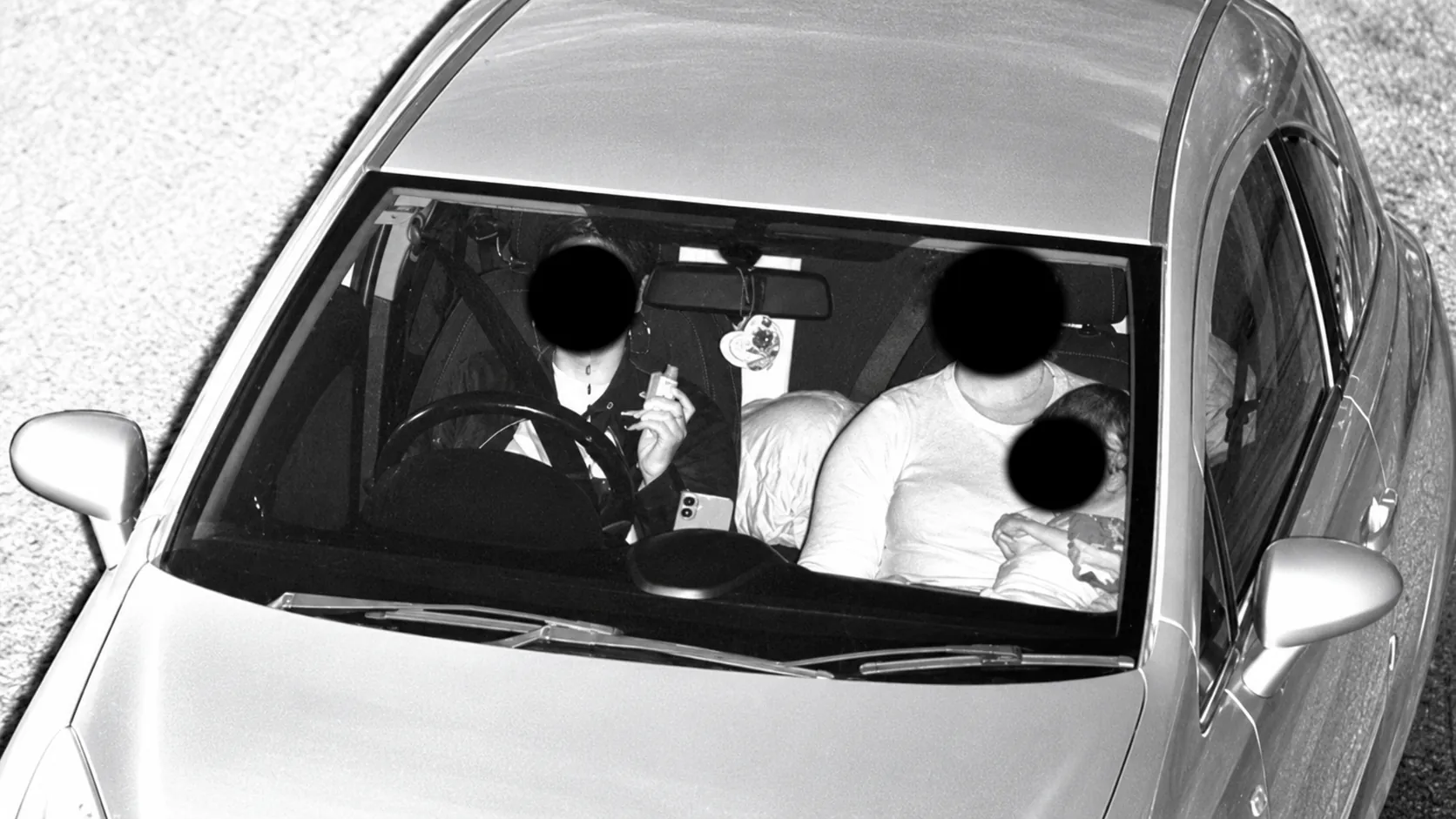
Photos released by WMCA include a front-seat passenger holding a small child on their lap with no restraint, a driver holding a phone in both hands and looking at the screen instead of the road, and an unbelted driver talking with a phone at their ear. WMCA says there were dozens of images of children carried without car seats or other suitable restraints.
Some UK outlets, including Sky News, reported slightly lower numbers: 11,045 and 6,030 seatbelt cases, 17,075 in total. The figures in this article come from WMCA’s official release.

Operators checked a sample of 8,024 images, but WMCA has not published the results
AECOM/Acusensus supplied the system. Acusensus is an Australian company whose cameras photograph the vehicle interior through the windshield, and its algorithm flags images that show a phone in a hand or an unfastened belt. According to WMCA, operators verified the system’s accuracy on a sample of 8,024 photos.
Every figure from the test counts “potential” violations. WMCA stresses that the pilot was meant to measure the scale of the problem, not to punish drivers, so none of the photos will go into ticketing proceedings. It is also unknown how many of the 19,145 flags would hold up after full human review, because WMCA has not published the results of the sample check.
Two cameras flagged in two weeks almost as many phone cases as police ticket in a year
About 2,000 drivers across the whole West Midlands region receive a fine and penalty points each year for using a phone while driving. Two cameras flagged 1,920 such cases in two weeks.
In my view, that gap is the most important number in the test. It does not show that drivers in Birmingham suddenly started reaching for their phones more often. It shows how small a fraction of violations traditional police checks catch.
WMCA also cites casualty data. According to 2025 road safety statistics, phone use was linked to 32 deaths and unfastened seatbelts to 133 deaths on British roads. Reducing both offenses is one of the goals of the National Road Safety Strategy, which the UK Department for Transport published in 2025.
Analysis
Two cameras in two weeks did what the entire regional police force does not manage in a year. I see both the strength of this technology and its trap in that fact.
The strength: enforcement that has been a lottery could become predictable. A driver who holds a phone because nobody will see it loses that assumption.
The trap: the pilot’s numbers are preliminary and based on automatic scanning, and WMCA has not said what share of the 8,024 checked photos turned out to be real violations. Before a system like this starts generating fines, that is the number I want to see. With about 19,000 flags, even an error rate of a few percent means hundreds of people wrongly penalized.
I have no doubt that systems of this kind will reach roads across Europe. The question is whether they arrive with publicly known accuracy and a clear appeals procedure, or quietly, as one more piece of infrastructure a driver learns about from a letter.
Police commissioner says the results will be used to plan future enforcement
Simon Foster, the West Midlands Police and Crime Commissioner, who also leads the regional road safety partnership, announced an analysis of the results with a view to using the cameras for enforcement. The results went to the West Midlands Road Safety Partnership, which is to decide on next steps.
Parker called the results “frankly shocking and far higher than we expected.” He said he would use all available means, including new technology, to improve safety on the region’s roads.
Mat MacDonald, the West Midlands Road Safety Commissioner, called phone use behind the wheel and failure to wear a seatbelt among the main causes of death and serious injury in the region. Paul Manzotti, co-chair of Better Streets for Birmingham, a group that campaigns for safer city streets, called for full enforcement of the rules with every available tool, combined with redesigned streets and transport.
West Midlands is not the first UK region to test the technology. According to Fleet News, Sussex Police launched AI cameras in early 2026 and recorded 620 seatbelt offenses and 110 phone offenses in the first week. Similar systems are already in use or being tested in places including the Netherlands, France, Greece and Cyprus.
This article will be updated as new information emerges about the West Midlands Road Safety Partnership’s decision on further use of the AI cameras.
Sources and methodology
- West Midlands Combined Authority, official release, October 12, 2026
- RAC
- Fleet News
- Sky News reporting, cited for the lower alternative figures (the original article gives no link)
The quotes from Richard Parker, mayor of the West Midlands, were verified against the original English-language source material.
Analysis and editorial responsibility: Piotr Wolniewicz, Editor-in-Chief, AIPORT. Original Polish reporting: Natalia Woś (aiport.pl).
This article was originally published in Polish on aiport.pl on October 19, 2026.
https://aiport.pl/co-nowego-w-ai/kamery-ai-w-west-midlands-wskazaly-prawie-19-tys-wykroczen-w-dwa-tygodnie-brytyjczycy-rozwazaja-stala-kontrole/