

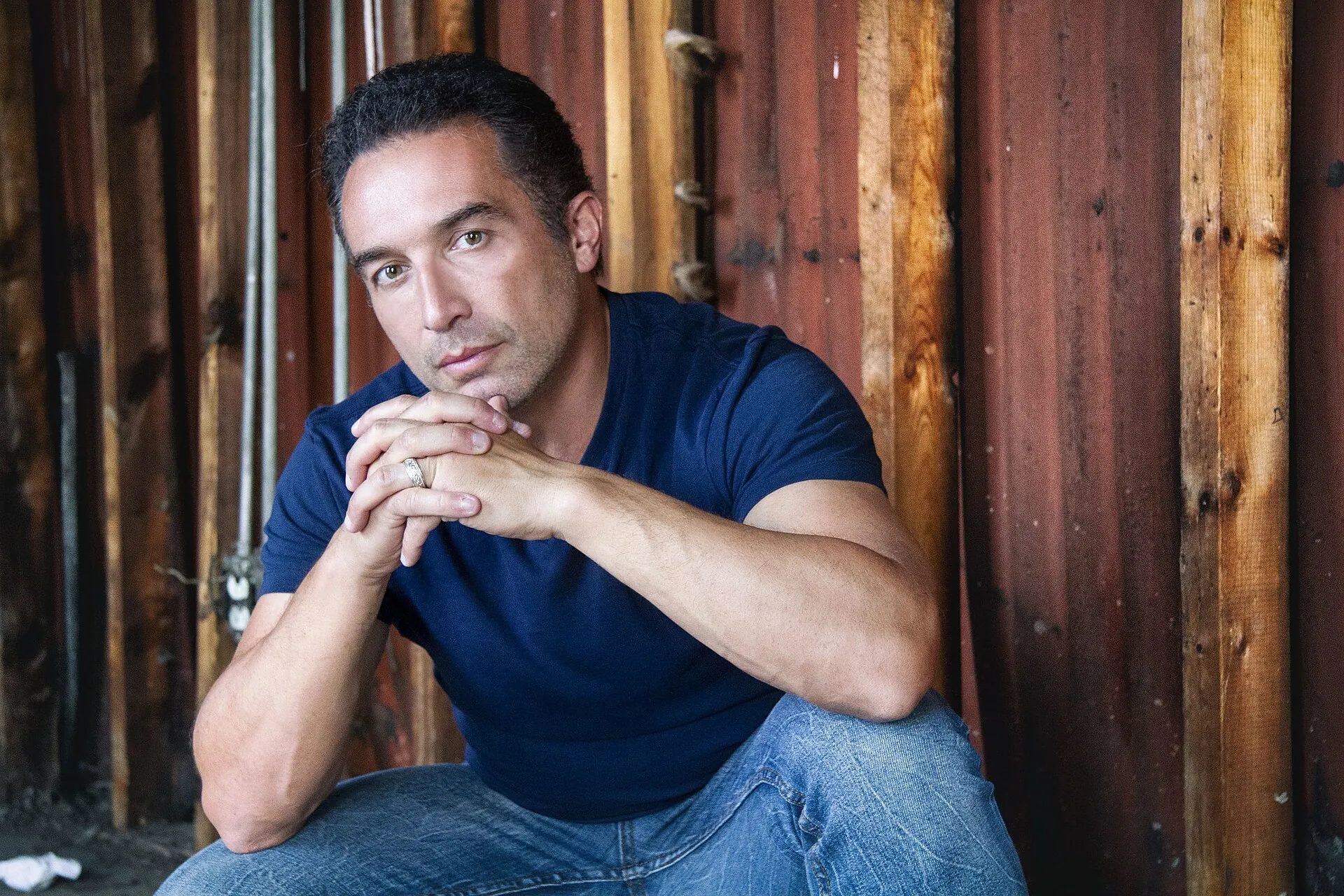
A federal court in Manhattan on October 6, 2026 sentenced Michael Smith, 54, of North Carolina, to 18 months in prison for collecting more than $8 million in streaming royalties through bots and hundreds of thousands of AI-generated songs. The U.S. Attorney’s Office for the Southern District of New York calls it the first criminal case in U.S. Department of Justice history involving AI-assisted streaming fraud.
- On October 6, 2026, a Manhattan federal court sentenced Michael Smith, 54, of North Carolina, to 18 months in prison and ordered him to forfeit $8,091,843.64 for collecting royalties through bots and hundreds of thousands of AI-generated songs, in what prosecutors call the first DOJ criminal case involving AI-assisted streaming fraud.
- From 2017 to 2024, Smith used up to 10,000 bots at once on platforms including Spotify, Apple Music, Amazon Music and YouTube Music, and in April 2023 his bots played his AI music 80.9 million times on YouTube Music, compared with 9.3 million plays for Taylor Swift's entire catalog.
- Prosecutors had sought at least 46 months and the U.S. Probation Office recommended 24, while Smith's defense argued that making and uploading AI music is not illegal and that no specific artist suffered a measurable loss.
Judge John G. Koeltl handed down the sentence. Smith also received two years of supervised release and must hand over $8,091,843.64 to the government. Prosecutors had asked for at least 46 months. The defense asked for supervision alone, with no prison time.
The scheme ran seven years and had three parts
According to the prosecutors’ press release, the fraud ran from 2017 to 2024. It had three elements: thousands of fake accounts on streaming platforms, software that made those accounts play Smith’s tracks nonstop, and the royalties generated by those artificial plays.
The accounts were set up with fake email addresses and fraudulently obtained debit cards. At peak, Smith used as many as 10,000 bots at once. He spread the plays across thousands of tracks so that no single song would stand out as an anomaly to the anti-fraud systems at Spotify, Apple Music, Amazon Music or YouTube Music.
The model required an enormous catalog. Prosecutors cite an email in which Smith told associates he needed a great many songs, very fast, to get around the platforms’ anti-fraud policies. Generative AI supplied them. According to the September 2024 indictment, Smith worked from 2018 with the head of an AI music company (identified in the documents as CC-3) and a music promoter (CC-4). The company supplied him with thousands of tracks a week, hundreds of thousands in total.
Prosecutors offered one comparison that shows the scale. In April 2023, Taylor Swift’s entire catalog drew 9.3 million plays on YouTube Music from family-plan accounts. That same month, Smith’s bots, also on family plans, played his AI music 80.9 million times.
Prosecutors sought 46 months; the judge gave 18
The sentence is less than half of what prosecutors requested and below the probation office’s recommendation. Smith pleaded guilty on March 19, 2026 to one count of wire fraud conspiracy (using electronic communications to carry out a fraud), which carries a maximum of five years. The original indictment, unsealed on September 4, 2024, contained three counts, each punishable by up to 20 years.
| Party | Requested sentence |
|---|---|
| Smith’s defense | Supervision, no prison |
| U.S. Probation Office | 24 months |
| Prosecutors | At least 46 months |
| Statutory maximum for the plea count | 60 months |
| Judge Koeltl’s sentence | 18 months |
According to Music Business Worldwide, the defense argued in an October 2 filing that creating songs with AI and uploading them to platforms is not illegal. It cited a September 2025 Spotify statement that, for payout purposes, all music is treated the same regardless of the tools used to make it. Smith’s lawyers also argued that no specific artist or songwriter suffered a measurable loss, and that a courtroom should not be where the industry resolves its systemic problems through one defendant.
Prosecutors replied that every cent of the loss ended up in Smith’s pocket. According to their filing, Smith received more than $14 million in total from the entities paying royalties. The loss figure both sides agreed on, more than $8 million, was reached after subtracting estimated revenue from legitimate plays and money Smith himself paid into the pool by buying subscriptions for his bots.

Fake plays drain the same pool that pays real artists
Streaming platforms do not pay a fixed rate per play. Royalties come from a pool tied to the service’s revenue and are divided in proportion to each track’s share of all plays in a given period. Every artificial play therefore shrinks the share of every legitimate play in the same pool. The Music Fights Fraud Alliance (MFFA), an industry coalition against streaming fraud, made exactly this argument to the court.
Industry groups reacted after the sentencing. Michael Lewan, MFFA’s executive director, said in a statement that “the industry’s fight against fraud is about more than one case.” The RIAA, the U.S. recording industry trade group, thanked the court for recognizing the seriousness of the offense. The international federation IFPI wrote on October 7 that the sentence sends a clear signal that streaming fraud is a crime, but that enforcement is only one element, because prevention and detection matter just as much.
Federal prosecutor Jamie McDonald put it this way: “Michael Smith exploited super intelligence technology to generate a fraud.”
The wording itself is a curiosity. The prosecutors’ October 6 press release consistently uses the term “super intelligence” rather than “artificial intelligence,” although the same office wrote “artificial intelligence” in March, when Smith pleaded guilty. The release does not say which AI tools Smith used.
Analysis
I read this sentence as more symbolic than deterrent. Eighteen months for seven years of activity and more than $8 million is less than many a small-time tax fraudster gets in the U.S. Still, the fact that the case went to criminal court changes the picture. Until now, the industry handled bots only with civil remedies and platform terms of service.
Another point deserves attention. The defense was right on one thing: Spotify itself says AI music is paid the same as human music. Smith’s problem was not that he generated songs. It was that he “listened” to them himself through 10,000 bots. The line between a legal AI music factory and a crime runs not at the generator but at the listener, and platforms still cannot reliably verify the listener.
The question that should worry every musician differs from the one in the headlines. It is not “should platforms do more.” It is how, for seven years, $14 million could flow to a man whose catalog included titles like “Calorie Screams.”
Spotify removed 75 million spam tracks; Deezer gets 90,000 AI songs a day
Smith’s case reached court at a moment when the platforms themselves admit that the flood of AI music has become an industry-wide problem. On September 25, 2025, Spotify announced that over the previous 12 months it had removed more than 75 million “spammy” tracks. It also announced a new spam filter, a policy against voice clones, and a standard for labeling AI involvement in metadata (through the DDEX organization). Since April 2024, Spotify has also paid recording royalties only for tracks that reach at least 1,000 plays within 12 months. According to data Spotify gave Music Business Worldwide in 2024, these safeguards limited Smith’s earnings on that platform to about $60,000.
France-based Deezer publishes the most detailed numbers in the industry:
- January 2025: about 10,000 fully AI-generated tracks a day, 10% of new uploads
- September 2025: 30,000 a day, 28%
- April 2026: 75,000 a day, 44%
- June 2026: an average of 90,000 a day, more than half of all uploads
Deezer also reports that AI music accounts for a small fraction of real listening (1% to 3% of plays), and that it detects 85% of those plays as fake and demonetizes them. Deezer CEO Alexis Lanternier says fraud, not creativity, is the main driver of the mass uploading of AI music. In summer 2026, Deezer announced it would remove AI tracks that had not been played for six months or had taken part in artificial stream inflation.
Smith is not the only person convicted. In Denmark, a man who used bots to inflate plays on 689 tracks received 18 months in prison in March 2024 (three to be served). In February 2025, an appeals court raised the sentence to 24 months. The U.S. case is far larger in scale and money.
The same anti-fraud machinery also cuts off real niche artists
The anti-fraud policies described above, including the 1,000-play threshold, demonetization of flagged AI tracks and the spam filter, apply to artists on those platforms. For independent artists there is a downside. The same machinery meant to stop bots also cuts off recording royalties for genuine niche acts that never reach the threshold.
Sources and methodology
- U.S. Attorney’s Office, Southern District of New York, press release, October 6, 2026: https://www.justice.gov/usao-sdny/pr/north-carolina-man-sentenced-18-months-prison-super-intelligence-assisted-music
- Music Business Worldwide: https://www.musicbusinessworldwide.com/man-behind-8m-ai-song-and-bot-streaming-fraud-is-sentenced-to-18-months-in-prison/
- Rolling Stone: https://www.rollingstone.com/music/music-news/mike-smith-sentence-18-months-music-streaming-fraud-1235636944/
- TechCrunch (Deezer data): https://techcrunch.com/2026/07/21/music-streamer-deezer-says-more-than-50-of-daily-uploads-are-ai-generated/
Bloomberg Law, BleepingComputer, Newsweek and Music Week were also used for verification. The quotes from Jamie McDonald, U.S. Attorney for the Southern District of New York, and Michael Lewan, executive director of the Music Fights Fraud Alliance, were verified against the original English-language source material.
Analysis and editorial responsibility: Piotr Wolniewicz, Editor-in-Chief, AIPORT. Original Polish reporting: Natalia Kaszubowska (aiport.pl).
This article was originally published in Polish on aiport.pl on October 19, 2026.
https://aiport.pl/co-nowego-w-ai/michael-smith-skazany-na-18-miesiecy-wiezienia-za-oszustwo-streamingowe-boty-i-setki-tysiecy-piosenek-ai-daly-mu-ponad-8-mln-dolarow-tantiem/